
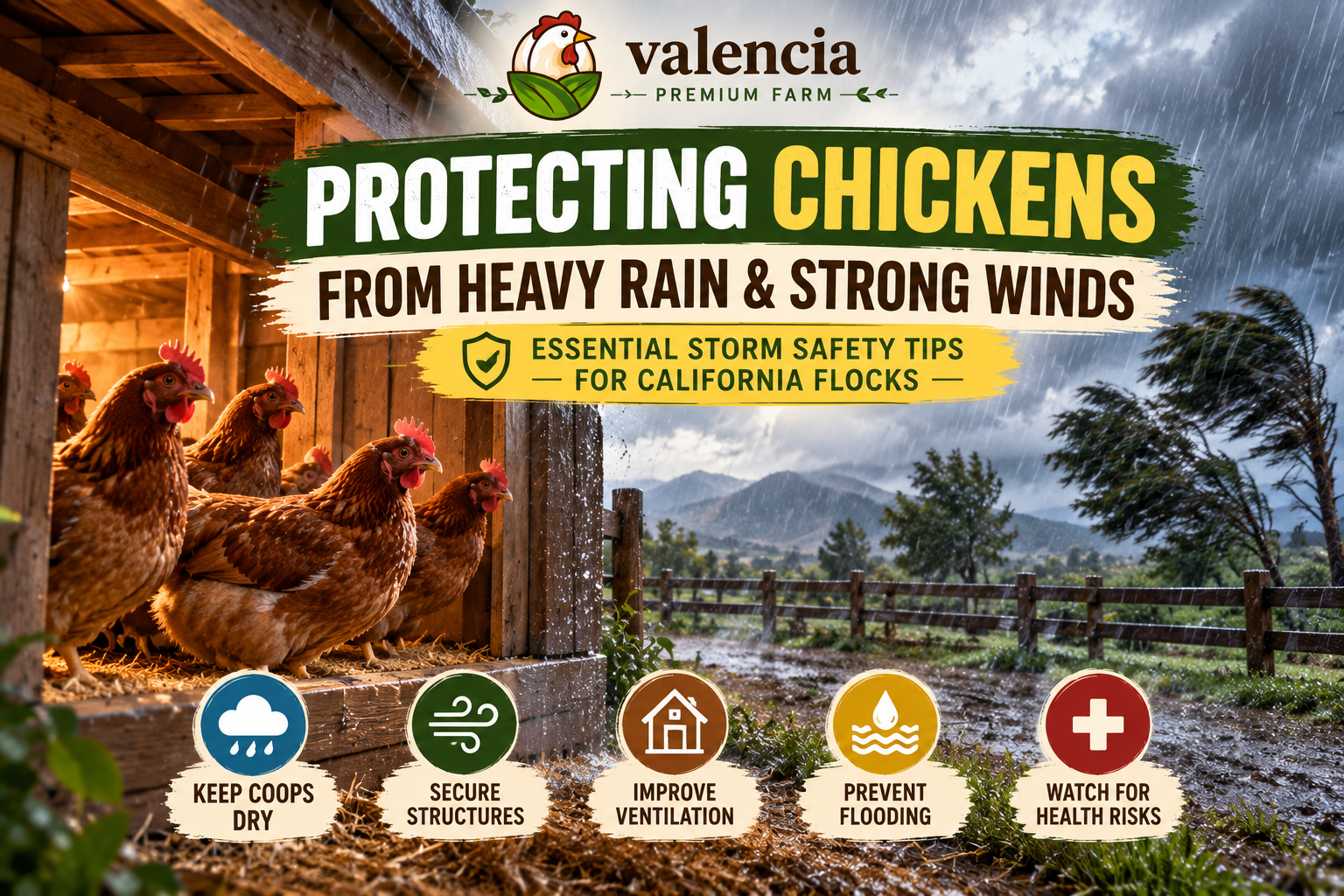
California is known for its sunshine, but residents of Los Angeles County, Santa Clarita Valley, and Acton also experience periods of heavy rain, strong winds, cold nights, and sudden weather changes.
For people raising backyard chickens or managing small farms, these conditions can create challenges that go far beyond a muddy chicken run.
A leaking roof, poorly secured enclosure, wet bedding, or contaminated drinking water can put a flock’s health and safety at risk.
Understanding how to protect chickens from rain and wind is an essential part of responsible poultry care.
Although healthy adult chickens can tolerate a range of weather conditions, prolonged exposure to moisture, cold drafts, and severe storms can become dangerous.
Fortunately, many weather-related problems can be prevented with proper preparation, secure housing, and regular observation.
In this guide, we’ll explore the effects of heavy rain and strong winds on chickens, the most common risks during California’s rainy season, and practical steps to keep your flock safer before, during, and after a storm.
Why Heavy Rain and Strong Winds Can Be Dangerous for Chickens
Chickens have natural defenses against ordinary weather conditions.
Their feathers help regulate body temperature, and they often seek shelter when conditions become uncomfortable.
However, these defenses have limitations.
When feathers become thoroughly soaked, the birds may lose some of their natural insulation. Combined with cold temperatures and strong winds, this can increase the risk of cold stress.
Rain can also affect the environment surrounding the chickens.
Water entering the coop may soak bedding, create muddy floors, damage stored feed, and increase humidity.
If these problems continue without correction, the flock may face additional health and welfare concerns.
Strong winds introduce another set of hazards.
Loose roofing, unsecured panels, falling branches, and flying debris can injure chickens or damage their shelter.
In extreme cases, poorly anchored coops can shift, collapse, or become unsafe.
The Most Common Weather-Related Risks
| Weather condition | Potential consequence |
|---|---|
| Heavy rain | Wet bedding, muddy runs, and flooding |
| Strong winds | Structural damage and flying debris |
| Cold rain and wind | Increased risk of cold stress |
| Poor drainage | Standing water and unsanitary conditions |
| Excess humidity | Ammonia buildup and respiratory irritation |
| Water entering feed storage | Spoiled or moldy feed |
| Damaged fencing | Escapes and increased predator exposure |
The severity of these risks depends on the birds’ age, health, breed, housing conditions, and the duration of the storm.
1. Cold Stress: What Happens When Chickens Get Wet and Cold?
One of the most important concerns during rainy weather is the combination of wet feathers, wind, and low temperatures.
A chicken’s feathers normally trap a layer of air close to its body, helping retain warmth.
When a bird becomes thoroughly wet, that protective insulation can become less effective.
Strong winds may increase heat loss, particularly when the chicken has no dry place to shelter.
Signs That a Chicken May Be Too Cold
Watch for changes such as:
- Unusual huddling with other birds.
- Fluffed-up feathers.
- Reduced activity.
- Reluctance to move.
- Holding a foot close to the body.
- Weakness or unusual lethargy.
Some of these behaviors can occur for other reasons, so they should be evaluated in context.
A bird that is weak, unresponsive, having difficulty breathing, or unable to stand needs prompt veterinary attention.
How to Reduce Cold Stress
Provide a dry, sheltered environment where chickens can escape direct wind and rain.
Make sure bedding remains dry and that birds have access to appropriate roosting areas.
Check vulnerable chickens more frequently, including young birds, elderly birds, and those already experiencing health problems.
Avoid assuming that every cold day requires artificial heating.
For many healthy adult chickens, a dry, well-ventilated, draft-free shelter is more important than adding a heat lamp.
Heating equipment can introduce fire hazards and should only be used when appropriate and safely installed.
2. Wet Bedding and Excess Moisture Inside the Chicken Coop
A dry chicken coop is one of the most important elements of good flock management.
During heavy rainfall, water may enter through damaged roofing, poorly sealed doors, low openings, or inadequate drainage.
Even small leaks can become significant when rain continues for several hours.
Why Is Wet Bedding a Problem?
Wet bedding can contribute to several undesirable conditions.
Increased humidity: Moisture accumulates inside the shelter, especially when ventilation is inadequate.
Ammonia buildup: Damp litter mixed with droppings can contribute to ammonia production, which irritates the respiratory system.
Poor foot conditions: Persistently wet and dirty flooring can contribute to foot problems.
Uncomfortable resting areas: Chickens may struggle to find clean, dry places to rest.
Microbial growth: Damp conditions can favor the growth of unwanted microorganisms.
How to Keep a Chicken Coop Dry
Inspect the roof and walls before the rainy season.
Repair leaks promptly and make sure water drains away from the structure rather than collecting underneath it.
Replace saturated bedding with clean, dry material.
Check corners, nesting areas, and spaces beneath water containers, where moisture can accumulate unnoticed.
A well-designed coop should keep rain out while allowing enough airflow to remove humid air.
Important: A completely sealed chicken coop is not necessarily a healthy one. Proper ventilation remains essential even during cold or rainy weather.
3. Strong Winds Can Damage Chicken Coops and Fencing
Strong winds are a significant concern for backyard chicken owners in Southern California.
Exposed properties, open terrain, and hillside locations can experience wind conditions that place additional stress on outdoor structures.
In areas around Acton and Santa Clarita Valley, preparing for windy conditions should be part of regular property maintenance.
What Can Happen During High Winds?
Strong winds can:
- Lift or loosen roofing materials.
- Damage doors and enclosure panels.
- Tear unsecured shade cloth or tarps.
- Knock over lightweight feeders and water containers.
- Cause branches to fall.
- Damage fencing and create escape routes.
- Blow debris into areas occupied by chickens.
A coop that appears stable in normal weather may not be secure enough for a severe wind event.
How to Protect a Chicken Coop from Strong Winds
Inspect structural connections.
Check hinges, roof fasteners, posts, latches, and fencing attachments.
Secure loose materials.
Remove or fasten objects that could become airborne.
Evaluate surrounding trees.
Look for damaged branches that could fall onto the coop.
Use appropriate windbreaks.
A properly positioned windbreak can reduce direct exposure to prevailing winds.
Check the coop’s anchoring.
Lightweight or portable structures may require additional anchoring appropriate to their design and local conditions.
Keep emergency access available.
Make sure you can safely reach the flock when necessary.
Never enter an area with falling branches, unstable structures, floodwater, or downed electrical lines.
Human safety must come first.
4. Flooding and Standing Water: Hidden Risks for Backyard Chickens
Heavy rain can create standing water even when a property does not experience major flooding.
Low-lying sections of chicken runs, compacted soil, blocked drains, and poorly graded surfaces may collect water.
These conditions can become particularly problematic when the water remains for extended periods.
Why Is Standing Water Dangerous?
Standing water may contain droppings, soil, debris, or other contaminants.
It can also attract wildlife, including wild birds, which may introduce disease risks.
Mud can make movement difficult and create unsanitary conditions around feeders and water containers.
In severe flooding, chickens may become trapped in areas where water levels rise.
How to Improve Drainage
Consider the following measures:
- Locate chicken housing on elevated, well-drained ground whenever possible.
- Direct roof runoff away from the coop.
- Keep gutters and drainage channels clear.
- Repair low areas where water repeatedly collects.
- Prevent drinking-water containers from becoming contaminated by runoff.
- Keep feed and bedding above areas vulnerable to flooding.
Avoid allowing chickens to drink from puddles or floodwater.
Provide clean drinking water in properly maintained containers.
If flooding affects the coop, move birds to a safe, dry location when it is safe to do so.
5. Poor Ventilation During Rainy Weather
A common mistake during cold or rainy conditions is closing every opening in the chicken coop.
Although this may seem like a good way to keep birds warm, it can trap moisture and gases inside.
Chickens release moisture through breathing, and additional humidity comes from droppings, water containers, and damp bedding.
Without adequate ventilation, the indoor environment can deteriorate.
Ventilation vs. Drafts: What’s the Difference?
Ventilation allows stale, humid air to leave the coop and fresh air to enter.
A draft is an unwanted stream of air that blows directly onto the birds, particularly where they rest.
A well-designed coop needs ventilation without exposing chickens to strong, direct drafts.
Practical Ventilation Tips
Place ventilation openings where they are protected from direct rain.
Use roof-level vents or other suitable openings that encourage air exchange.
Avoid directing cold wind toward roosting areas.
Check for condensation on walls and ceilings.
If you notice persistent dampness or a strong ammonia smell, investigate ventilation and bedding conditions immediately.
The goal is not to eliminate airflow.
It’s to maintain a dry, comfortable environment with healthy air quality.
6. Wet Feed and Contaminated Drinking Water
Rainstorms can affect more than the coop itself.
Feed storage and water quality are equally important.
If chicken feed becomes wet, it may spoil or develop mold.
Moldy feed should never be offered to chickens.
Similarly, drinking-water containers can become contaminated by mud, runoff, or debris during storms.
Protecting Chicken Feed
Store feed in clean, dry, pest-resistant containers.
Keep containers off wet ground whenever possible.
Check lids and storage areas for leaks.
Discard feed that has become moldy or otherwise spoiled.
Avoid leaving large amounts of feed exposed outdoors when rain is expected.
Maintaining Clean Water
Inspect drinking-water containers before and after storms.
Replace water that has become contaminated.
Clean containers regularly.
Position waterers where they are less likely to collect rainwater runoff.
Fresh, clean water should remain available to the flock throughout the day.
7. Can Heavy Rain and Wind Affect Egg Production?
Weather-related stress can influence the behavior and productivity of chickens.
During periods of severe weather, some birds may spend more time sheltering, eat differently, or experience disruptions to their usual routine.
Cold stress, illness, inadequate nutrition, and other environmental problems can also affect egg production.
However, weather is only one factor.
Daylight hours, age, breed, molting, nutrition, and overall health also influence how frequently chickens lay eggs.
Why Egg Production May Change
Reduced daylight: Shorter days can naturally affect laying patterns.
Environmental stress: Severe weather and disturbances may affect normal behavior.
Nutritional changes: Inadequate access to feed or water can affect flock health and production.
Illness: Respiratory or other health problems may reduce productivity.
Age and molting: Egg production naturally varies over a hen’s lifetime.
A temporary change does not necessarily indicate a serious problem.
However, sudden or persistent declines, especially when accompanied by illness, should be evaluated with a poultry veterinarian.
8. How to Prepare Your Chicken Coop Before a Storm
The best time to protect a flock is before severe weather arrives.
A simple preparation routine can reduce preventable risks.
Before the Rain and Wind Arrive
Inspect the shelter.
Check the roof, doors, walls, windows, and fencing for damage.
Repair leaks.
Address any openings that allow water to enter.
Secure outdoor equipment.
Fasten lightweight objects, shade materials, feeders, and other loose items.
Prepare dry bedding.
Keep clean replacement bedding in a protected storage area.
Check drainage.
Clear gutters and drainage paths.
Protect feed supplies.
Make sure feed remains dry and securely stored.
Review emergency arrangements.
Identify a safe alternative shelter if the existing coop becomes damaged or flooded.
Monitor weather alerts.
Follow official forecasts and warnings from the National Weather Service.
During a Storm
Keep chickens in a secure, dry shelter appropriate for the conditions.
Make sure they have access to feed and clean water.
Avoid releasing birds into areas exposed to dangerous winds, flooding, or falling debris.
Do not attempt repairs outside when conditions are unsafe.
If the property is under an evacuation order, follow emergency instructions and use a prearranged animal evacuation plan when feasible.
After the Storm
Wait until conditions are safe before inspecting the property.
Check the coop for structural damage, water intrusion, and debris.
Replace wet bedding.
Inspect feed and water supplies.
Look for injuries, unusual behavior, or signs of illness.
Repair damaged fencing before allowing birds into outdoor areas.
9. Warning Signs That a Chicken Needs Veterinary Attention
Not every chicken exposed to rain will become sick.
However, owners should monitor their flock carefully after severe weather.
Seek veterinary guidance if a chicken shows:
- Persistent difficulty breathing.
- Severe weakness or inability to stand.
- Unusual discharge from the eyes or nostrils.
- Significant injuries.
- Inability or refusal to eat and drink.
- Marked changes in behavior.
- Sudden unexplained illness affecting multiple birds.
These signs can have different causes and should not be treated as a diagnosis.
If several birds become ill or die unexpectedly, contact a veterinarian or appropriate animal-health authority promptly.
10. Chicken Care During California’s Rainy Season
Southern California has a climate that differs from many other poultry-raising regions in the United States.
Rather than focusing only on snow and prolonged freezing temperatures, many local flock owners must prepare for combinations of rain, wind, fluctuating temperatures, and occasional flooding.
Chicken Care in Santa Clarita Valley
Properties in Santa Clarita Valley may have different drainage conditions depending on terrain, soil, and construction.
For backyard chicken owners, regular maintenance is especially important.
Check whether rainwater flows toward or away from the coop.
Inspect fencing and outdoor enclosures after windy weather.
Keep dry bedding available during periods of repeated rain.
Chicken Care in Acton, California
Acton includes rural properties and open terrain where chicken housing may be more exposed to wind.
Owners should pay particular attention to structural anchoring, roof security, drainage, and protection from direct drafts.
The appropriate precautions depend on the specific property’s exposure and construction.
Chicken Care Throughout Los Angeles County
Conditions can vary considerably across Los Angeles County.
Coastal neighborhoods, valleys, foothills, and desert-adjacent areas do not experience identical weather.
Instead of relying on general assumptions, use local forecasts and evaluate the actual conditions at your property.
11. Common Mistakes to Avoid During Rainy Weather
Even experienced chicken owners can overlook simple maintenance issues.
Here are several common mistakes worth avoiding.
Mistake 1: Assuming Chickens Don’t Need Shelter Because They Have Feathers
Feathers provide insulation, but they do not eliminate the risks of prolonged wet and windy conditions.
Mistake 2: Completely Sealing the Coop
Blocking every ventilation opening can trap moisture and ammonia.
Mistake 3: Ignoring Wet Bedding
Damp bedding should be addressed promptly rather than left to accumulate.
Mistake 4: Leaving Feed Exposed to Rain
Wet feed can spoil and become unsuitable for consumption.
Mistake 5: Failing to Secure Lightweight Structures
Portable coops, shade panels, and temporary enclosures may be vulnerable to high winds.
Mistake 6: Allowing Chickens into Flooded Areas
Floodwater and contaminated standing water can create injury and disease risks.
Mistake 7: Waiting Until the Storm Begins to Make Repairs
Preparing in advance is safer and more effective than attempting emergency repairs during severe weather.
12. Responsible Chicken Care and Local Farming
Raising chickens involves more than providing food and collecting eggs.
It requires ongoing attention to housing, nutrition, sanitation, environmental conditions, and animal welfare.
Weather preparedness is an important part of that responsibility.
For customers who buy eggs from local farms, understanding these challenges can provide a greater appreciation of the work involved in raising poultry.
At Valencia Premium Farm, we believe that animal care and responsible farming practices matter.
Our farm is located in Acton, California, and we offer farm-fresh eggs from cage-free hens fed non-GMO feed.
We encourage customers to learn more about local agriculture and ask questions about the food they purchase.
Frequently Asked Questions About Chickens, Rain, and Strong Winds
Can chickens stay outside in the rain?
Healthy adult chickens may tolerate light rain, but they should always have access to dry shelter. Prolonged heavy rain, cold temperatures, and strong winds can create dangerous conditions.
Can chickens get sick from being wet?
Being wet does not automatically cause an infectious disease. However, prolonged wet and cold conditions can contribute to stress, and damp, unsanitary housing can increase health risks.
How do I keep my chicken coop dry during heavy rain?
Repair roof leaks, improve drainage, replace wet bedding, protect openings from wind-driven rain, and maintain proper ventilation.
Should I close all the windows in my chicken coop during a storm?
Protect the birds from direct rain and drafts, but maintain adequate ventilation. A completely sealed coop can trap humidity and ammonia.
Are strong winds dangerous for chickens?
Yes. Strong winds can cause heat loss, damage shelters, dislodge roofing, and send debris into chicken enclosures.
Can chickens drink rainwater from puddles?
It’s safer to provide clean drinking water in maintained containers. Puddles and standing water may contain contaminants.
Can heavy rain reduce egg production?
Severe weather and environmental stress may contribute to changes in laying behavior, but egg production also depends on daylight, age, nutrition, breed, and health.
Should I use a heat lamp when it rains?
Not automatically. Healthy adult chickens often do well in a dry, ventilated shelter without supplemental heat. Heat lamps can create fire hazards. Consult a poultry professional about the needs of vulnerable birds or unusually cold conditions.
What should I do if my chicken coop floods?
If safe, move chickens to a dry, secure shelter with clean water and feed. Avoid entering dangerous floodwater or unstable structures. Inspect and clean the affected area before returning the birds.
Where can I learn more about locally raised eggs in Santa Clarita Valley?
Valencia Premium Farm offers farm-fresh eggs from its farm in Acton, California. Customers can contact the team to learn about available quantities, pickup, and local delivery options.
Protecting Chickens Starts with Preparation
Heavy rain and strong winds are part of the environmental challenges that chicken owners may face in California.
Although chickens are adaptable animals, they depend on appropriate shelter, clean water, proper nutrition, and attentive care to remain healthy during difficult weather.
Keeping the coop dry, maintaining ventilation, improving drainage, securing structures, and monitoring the flock can help prevent many avoidable problems.
For backyard chicken owners in Santa Clarita Valley, Acton, and Los Angeles County, preparing before a storm is one of the most practical ways to protect their birds.
At Valencia Premium Farm, we value responsible farming and the connection between animal care and the food that reaches local households.
Discover Farm-Fresh Eggs from Valencia Premium Farm
Interested in buying eggs from a local farm?
🥚 Dozen Fresh Eggs — $7
🥚 30-Count Egg Tray — $15
🚚 Local delivery service in Santa Clarita Valley, subject to address confirmation.
📍 Farm Pickup: 34717 Red Rover Mine Rd, Acton, CA 93510
📲 Call, Text, or WhatsApp: (661) 627-7030
Valencia Premium Farm — Farm Fresh. Local. Delicious.
Supporting local agriculture, one fresh egg at a time.